More than updates: Real-time traffic tools that keep my family calm and on time
Getting everyone out the door—kids with their backpacks, lunches packed, someone always late—can feel like herding cats. Then comes the traffic: unexpected delays, stressful gridlock, missed appointments. I used to dread driving. But now? I breathe easier. Real-time traffic information quietly transformed our chaotic commutes into smooth, predictable moments. It’s not just about speed—it’s about peace, time, and showing up present, not frazzled. What started as a small change in how I check the road ahead has grown into something deeper: a sense of control, a calmer home, and more moments that matter. This isn’t just tech. It’s the quiet helper that lets me be the mom, wife, and person I want to be.
The Morning Chaos No One Talks About
Let’s be honest—mornings in most homes don’t look like the calm scenes on coffee ads. Ours used to be a whirlwind of mismatched socks, forgotten permission slips, and someone crying because their favorite cereal was gone. Then, just as we finally piled into the car, the real test began: the drive. Without knowing what lay ahead on the road, every red light felt like a personal setback. A five-minute backup at the intersection near the high school could mean my daughter missed her bus. A stalled truck on the highway meant my husband arrived late to an important meeting. And me? I’d sit there, gripping the wheel, feeling helpless and guilty, like I’d failed just by not foreseeing the chaos.
What I didn’t realize then was that the problem wasn’t my planning—it was my lack of information. I could pack lunches, lay out clothes, and set alarms, but I couldn’t control traffic. Or so I thought. The real shift happened when I stopped seeing traffic as something to endure and started seeing it as something I could understand. Real-time traffic tools gave me that window into what was actually happening on the roads. No more guessing. No more arriving flustered, apologizing for being late. Just a simple glance at my phone before pulling out of the driveway—and suddenly, I wasn’t reacting. I was leading.
One morning, as we inched forward in a line of cars, my daughter turned to me and asked, ‘Will I be late again?’ Her voice was small, tired. That moment hit me hard. She wasn’t just worried about missing roll call—she was absorbing my stress, internalizing the chaos. Children notice more than we think. They feel the tension in our shoulders, the sharpness in our tone when we say, ‘Hurry up!’ That’s when I knew I needed a better way. Not just for me, but for all of us. And that’s exactly what real-time traffic data became: a way to protect our peace, one drive at a time.
How Real-Time Traffic Actually Works (Without the Tech Jargon)
I’ll admit it—I’m not a tech expert. I don’t care about algorithms or data streams. All I care about is whether I can get my kids to school on time without my blood pressure rising. So when people start talking about how real-time traffic works, I used to tune out. But here’s the thing: it’s not complicated at all. In fact, it’s kind of brilliant in how simple it is.
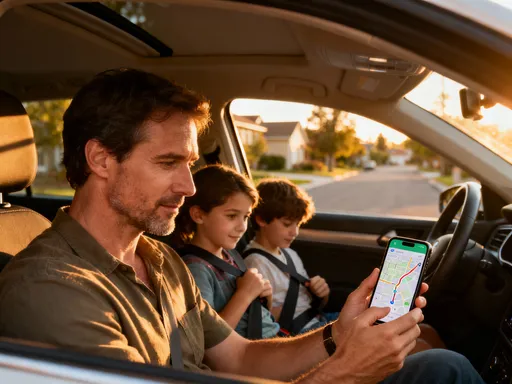
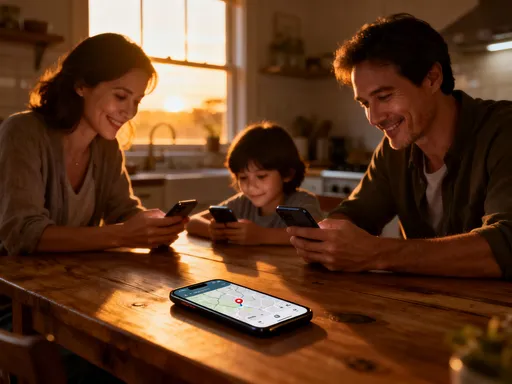
Think of it like this: every smartphone with location services on is like a tiny reporter sending updates about where it is and how fast it’s moving. Millions of these signals—anonymous, secure—are collected by apps like Google Maps or Apple Maps. When a lot of phones slow down in the same spot, the system knows there’s a slowdown. It could be an accident, heavy rain, or just too many cars. That info gets updated instantly, so you see red, orange, or green lines on the map. Red means slow. Green means clear. It’s that easy.
And it’s not just phones. Some cities use sensors built into the roads, traffic cameras, or even data from connected cars to feed this system. The result? A live picture of the roads, almost like a heartbeat monitor for the city. When your navigation app says, ‘Accident ahead—rerouting,’ it’s not making a guess. It’s seeing what’s already happening, right now. It’s like having a friend in a helicopter, calling down to say, ‘Avoid Main Street—there’s a fender bender.’
The best part? You don’t have to do anything special. No extra buttons, no complicated settings. Just open your map app, and it’s already working for you. Some even give voice alerts—‘In 500 feet, turn left to avoid congestion’—so you don’t have to look at the screen. That’s the kind of tech I love: the kind that works quietly in the background, like a good kitchen timer or a slow cooker. It doesn’t demand attention. It just helps.
The School Run That Finally Feels Manageable
School drop-offs used to be my least favorite part of the day. Not because I didn’t want to be there—I love seeing my kids off with a hug and a smile. But the pressure of timing it just right, of avoiding that one stretch of road where construction had been going on for months, of praying there wasn’t another school event causing traffic—ugh. It was exhausting. I’d pull up to the school, heart racing, watching the clock, whispering, ‘Please don’t be late, please don’t be late.’
Now, it’s different. I check my traffic app before I even start the car. It’s become part of my routine, like checking the weather. Is it raining? Better grab a jacket. Is there a backup near the school zone? Better leave five minutes early. Simple. No surprises. And that small change has made a huge difference in how we all feel when we arrive.
Last week, we pulled up to the school gate seven minutes early. My son looked at the clock and said, ‘We got here early—can we listen to one more song?’ We sat in the car, windows down, singing along to his favorite tune. No rushing, no stress, just a quiet moment together. That’s not something I could have imagined a year ago. Back then, early arrival meant I was either panicking about being too early or already stressed about the next thing on my list.
But now, those extra minutes aren’t wasted. They’re gifts. Sometimes we talk. Sometimes we just breathe. And my daughter? She walks into school with her shoulders relaxed, not hunched with worry. She told me, ‘Mom, I like when we’re not in a hurry. It feels nicer.’ That’s when it hit me: this isn’t just about me. It’s about creating a calmer rhythm for our whole family. And that rhythm starts the moment we turn the key in the ignition.
Avoiding the Mistakes Everyone Makes (Even Tech-Savvy Drivers)
You’d think that just having a traffic app would solve everything. But I learned the hard way that it’s not enough to just have the tool—you have to use it the right way. I used to make all the classic mistakes. I’d only check traffic when I was already stuck in it. Sound familiar? You’re sitting there, late, frustrated, and suddenly remember, ‘Oh, I could check the app.’ But by then, it’s too late. The damage is done. Or I’d trust the ‘fastest route’ the app suggested without thinking—only to end up on a narrow back road with no way to turn around. And sometimes, I’d ignore the voice alerts because I thought I knew better. ‘I’ll just keep going,’ I’d say. Until I hit a standstill.
The real shift came when I started treating my navigation app like a co-pilot, not just a map. That means setting it up *before* I drive. I enter my destination while I’m still in the house, so the app has time to analyze traffic and suggest the best route. I turn on alerts so it can speak up if something changes. And I’ve learned to trust it—not blindly, but with respect. It sees more than I can from the driver’s seat. It knows about accidents two miles ahead, even if I can’t see them yet.
Another big lesson: anticipate, don’t just react. If it’s Friday at 4 p.m., I know the roads near the mall will be packed. If it’s raining, I expect slower traffic. I don’t wait for the app to tell me that—though it does. I’ve started building that awareness into my routine. Now, instead of feeling caught off guard, I feel prepared. And that changes everything. Preparation doesn’t eliminate surprises, but it removes their power to derail us. It’s like packing an umbrella when the forecast says 30% chance of rain. You’re not paranoid—you’re practical.
And here’s a small tip: don’t just follow the app. *Talk* to it. Sounds silly? Maybe. But when I say out loud, ‘Okay, Google, take me home and avoid traffic,’ it feels more intentional. It’s like giving instructions to a helpful friend. That small act of engagement makes me more present, more in control. And honestly, my kids think it’s fun. They chime in: ‘Ask it to play music!’ or ‘Tell it to go the long way so we can see the ducks.’ Tech doesn’t have to be cold. It can be part of the family rhythm.
Saving Time Without Sacrificing Peace
People talk about saving time like it’s just about getting somewhere faster. But for me, it’s not just the minutes—it’s what I do with them. Before real-time traffic tools, I used to arrive at work tense, my mind still racing from near-misses on the road, the stress of being late, the guilt of snapping at the kids because I was in a hurry. I wasn’t present. I was still back in the car, replaying the drive.
Now, I arrive calm. I’ve reclaimed over an hour a week—just by avoiding delays and taking smarter routes. That’s seven hours a month. What could you do with an extra seven hours? I use it for coffee with my partner, for a quiet walk around the block, for reading a few pages of a book before bed. Sometimes, I just sit and breathe. No agenda. No rush. That time isn’t just ‘free’—it’s healing.
And the peace? That’s priceless. I’ve noticed I’m more patient at home. I listen better. I laugh more. The kids say, ‘Mom, you seem happier.’ And I am. Because I’m not carrying the weight of a stressful commute into every part of my day. Technology that gives back time *and* peace? That’s rare. This does both. It’s not flashy. It doesn’t have a fancy name or a big price tag. But it’s changed how I live.
I think we often overlook the small tools that make life smoother. We chase big solutions—new diets, expensive organizers, complicated routines. But sometimes, the real game-changer is something quiet, something that works in the background. Real-time traffic tools don’t fix everything. But they fix a piece of the puzzle that matters: the transition between home and the world. And when that piece fits, the whole picture gets clearer.
When the Unexpected Happens—And You’re Ready
No matter how well we plan, life throws curveballs. Rainy days turn roads into rivers. Accidents happen. A water main breaks. A parade you didn’t know about blocks your route. These things can’t always be predicted—but they don’t have to ruin your day. That’s where real-time updates shine. They don’t prevent the unexpected, but they help you adapt to it quickly.
I remember one afternoon, heading to pick up my daughter from a birthday party. Ten minutes from the bridge that crossed the river, my app buzzed. ‘Bridge closed ahead. Recalculating route.’ My heart jumped. Without the alert, I would have driven straight into a backup, maybe missed the party altogether. But because I was warned, I had time to adjust. The app guided me through side streets I didn’t know existed, and we arrived just on time. My daughter had no idea how close we came to chaos. All she knew was that we got there, and we were laughing.
She even said, ‘We’re like spies avoiding enemy zones!’ I laughed. But in that moment, I realized something: being prepared doesn’t make life perfect. But it does make it lighter. It turns potential disasters into little adventures. Instead of panic, we had humor. Instead of stress, we had teamwork. And that’s a gift.
These tools don’t make us invincible. But they give us resilience. They help us roll with the punches. And in a world that often feels overwhelming, that ability to adapt—to stay calm when things go off plan—is one of the most valuable skills we can have. For me, it’s not just about driving. It’s about modeling that mindset for my kids. I want them to learn that when life doesn’t go as expected, the answer isn’t to fall apart. It’s to adjust, to find another way, to keep going—with a little help from the tools that support us.
Making Smarter Choices for Your Whole Life
Here’s what I didn’t expect: real-time traffic tools didn’t just change my drives. They changed how I think. I’ve become more mindful about planning, more aware of timing, more intentional about my choices. I find myself applying the same logic to other parts of life. When I plan meals, I check what’s on sale and what we already have—like optimizing a route. When I schedule calls, I pick times when I know I’ll be calm, not rushed. Even in parenting, I’ve learned to anticipate needs before they become crises—just like checking traffic before I drive.
It’s a ripple effect. Small changes in one area create shifts in others. When you reduce stress in your commute, you bring less tension into your home. When you arrive on time, you build trust—in yourself and from others. When you reclaim time, you create space for what matters. And that space? That’s where life happens. Not in the rush, not in the chaos, but in the quiet moments of connection, rest, and joy.
Tech at its best doesn’t overwhelm you with features or demand your attention. It supports you quietly, like a good pair of shoes or a well-organized pantry. It helps you live not just faster, but better. More calmly. More fully. Real-time traffic tools are a small part of that. But for me, they’ve been a big deal. They’ve given me back control, peace, and time—three things every busy woman could use more of.
So if you’re still driving blind, trusting luck instead of information, I get it. I was there. But I also know there’s a better way. It’s not about being perfect. It’s about being prepared. It’s about choosing calm over chaos, presence over stress. It’s about showing up—on time, with your wits about you, and your heart at peace. And that? That’s worth turning on.