Cut My Evening Stress by 80%: The 10-Minute Smart Routine That Changed My Nights
Ever lie in bed, mind racing, while your phone glows in the dark? I was there—until I started using smart lighting and calming sounds to transform my bedroom into a true relaxation zone. It wasn’t about buying gadgets; it was about creating a simple, repeatable ritual. This small shift didn’t just help me sleep better—it made me feel calmer, more in control, and genuinely more present at the end of each day. If you’ve ever felt like your evenings slip away in a blur of stress and screens, this is for you. What changed everything wasn’t a dramatic overhaul, but a quiet 10-minute habit that helped me slow down, breathe, and finally let go.
The Problem: Why Nights Feel So Chaotic
Let’s be honest—how many of us truly unwind at night? For years, my evenings looked the same: dinner cleanup, a quick chat with my kids, maybe folding laundry while checking emails, and then collapsing into bed only to find my brain still wide awake. I’d scroll through social media, replaying the day’s conversations or worrying about tomorrow’s to-do list. The glow of the phone felt comforting at first, but it kept me trapped in a cycle of mental noise. I wasn’t alone. So many women I talk to—mothers, professionals, caregivers—feel the same. We give so much during the day that by nighttime, there’s nothing left for ourselves, and our nervous systems never get the signal to rest.
Our bodies are designed to follow natural rhythms, but modern life throws that off. Bright overhead lights, late screen time, and constant notifications keep our brains in ‘alert’ mode. Even if we’re physically tired, mentally we’re still buzzing. I remember lying in bed, heart racing over a work email I couldn’t respond to until morning, or replaying an awkward moment from a conversation. That kind of mental clutter doesn’t just steal sleep—it steals peace. And over time, it chips away at our energy, patience, and joy. I tried all the usual advice: ‘read a book,’ ‘drink chamomile tea,’ ‘avoid screens.’ But without a real structure, those tips felt like bandaids on a leaky faucet. What I needed wasn’t another checklist—it was a signal, something that told my body and mind, ‘It’s safe to slow down now.’
Discovering the Power of Smart Leisure Spaces
The turning point came when I visited a friend’s home and noticed how peaceful her bedroom felt. It wasn’t just the decor—though the soft linen and neutral tones helped—but the lighting. It was warm, low, and gentle, like candlelight without the fire hazard. She mentioned she used a smart bulb that automatically dimmed and shifted to a sunset-like hue every evening. That small detail sparked something in me. I realized my bedroom wasn’t just a place to sleep; it could be a sanctuary, intentionally designed to help me decompress.
I started experimenting. I bought a single smart bulb—one I could control from my phone. At first, I played with colors just for fun, but then I tried setting it to warm amber at 9 p.m. The effect was almost immediate. The cool white light I used during the day felt energizing, even harsh by nightfall. But that soft golden glow? It was like a warm hug for my nervous system. I didn’t even realize how much the harsh lighting had been adding to my stress until I changed it. It wasn’t magic—it was science. Our brains respond to light cues. When we mimic the natural sunset, we signal the body to start producing melatonin, the hormone that prepares us for sleep. But beyond biology, there was something emotional about it. That dimming light became a ritual, a daily reminder that the day was ending and it was time to care for myself.
Starting Small: My First 10-Minute Evening Ritual
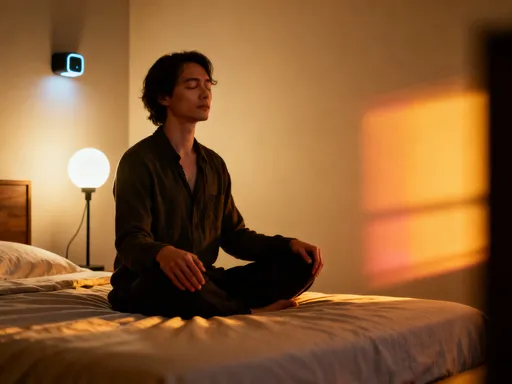
I didn’t go all-in right away. In fact, my first real attempt was just 10 minutes. At 9 p.m., I set a gentle alarm on my phone—not to do anything urgent, but to begin my wind-down. I’d dim the smart light to 30% brightness and switch it to warm amber. Then, I opened a free meditation app and played a 10-minute ‘forest night’ soundscape—crickets, a distant owl, soft wind through the trees. I’d sit on the edge of the bed, hands in my lap, and just breathe. No pressure to ‘clear my mind’ or meditate perfectly. Just be still.
The first few nights, I caught myself reaching for my phone out of habit. But over time, something shifted. That sound of rustling leaves became a cue. I remember one night, after a particularly stressful day, I started the soundscape and within minutes, I felt my shoulders drop. I hadn’t even noticed how tense I was. It was like my body finally got the message: ‘You’re safe. You can relax now.’ I didn’t fall asleep during those 10 minutes—though sometimes I got drowsy—but I carried that calm into bedtime. The ritual wasn’t about adding more to my schedule; it was about reclaiming time for myself in a way that felt doable, even on busy nights. And the best part? It didn’t require perfection. Some nights I started at 9:15. Some nights I only did five minutes. But showing up—even imperfectly—made a difference.
Choosing the Right Tools Without Overwhelm
When I first looked into smart home devices, I felt overwhelmed. So many brands, so many features—voice control, scheduling, color wheels, brightness levels. It felt like I needed a degree in tech just to pick a light bulb. I almost gave up. But then I reminded myself: this wasn’t about building a futuristic home. It was about reducing stress, not adding to it. So I asked myself one simple question: What tool would make the biggest difference with the least effort?
For me, it was two things: a smart speaker and a color-tunable bulb. I already had a basic smart speaker, so I didn’t need to buy anything new. I used it to play calming audio—nature sounds, soft piano music, or guided breathing exercises. No scrolling, no decisions. I could just say, ‘Play evening wind-down playlist,’ and it would start. The bulb was the second piece. I chose one that worked with my existing Wi-Fi and could be controlled through a simple app. I didn’t care about fancy features like syncing with my TV or flashing to music. I just wanted something that could shift from bright white to warm amber with a tap. And I found one that cost less than $20. The key was focusing on purpose, not specs. I ignored the marketing hype and asked: Does this help me feel calmer? Is it easy to use? Can I set it and forget it? If the answer was yes, it stayed. If not, I skipped it. Tech should serve us, not complicate our lives.
Building Consistency: How the Routine Stuck
The real challenge wasn’t starting—it was sticking with it. Like so many good habits, my 10-minute ritual fell apart when life got busy. One night, I forgot. The next, I was too tired. Then a family movie night ran late, and I skipped it again. I started to think, ‘What’s the point? I’m not doing it right.’ But then I remembered something a wellness coach once said: ‘Consistency isn’t about perfection. It’s about returning, again and again, with kindness.’ So I tried a different approach. I linked my ritual to something I already did every night without fail—brushing my teeth. Right after I finished brushing, I’d dim the lights and start the soundscape. No extra thinking, no decisions. It became automatic.
I also used a gentle reminder on my phone—just a soft chime at 9 p.m. that said, ‘Time to breathe.’ No pressure, no guilt. If I couldn’t do 10 minutes, I’d do two. If I was already in bed, I’d just listen with my eyes closed. Over time, my body began to recognize the cues. The dimming light, the sound of rain—these weren’t just actions; they became signals. I noticed that on nights I skipped the routine, I had a harder time falling asleep. That feedback loop helped me stay committed. But more than that, I started to look forward to it. That 10 minutes became my ‘me time,’ a small act of self-care I could count on, no matter how chaotic the day had been. It wasn’t about forcing relaxation—it was about creating space for it to arrive naturally.
Unexpected Benefits Beyond Sleep
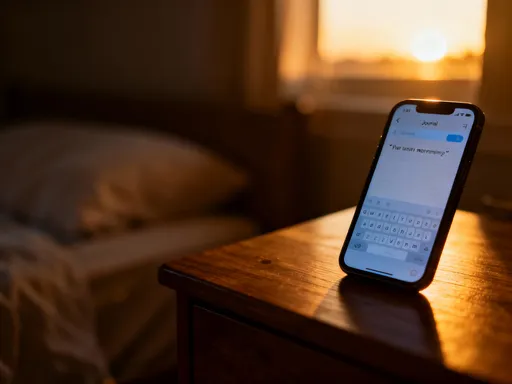
I started this journey for better sleep, and yes, that improved. I fell asleep faster and woke up feeling more refreshed. But what surprised me were the ripple effects throughout my life. Because I was calmer at night, I was calmer during the day. I found myself more patient with my kids, more present in conversations, and less reactive to small stressors. One morning, I realized I hadn’t checked my email first thing—that used to be my habit. Instead, I made tea and sat quietly, enjoying the sunrise. That small shift felt like a victory.
I also started reading more. With less screen time before bed, I picked up a novel I’d been meaning to finish. I rediscovered how much I loved getting lost in a story. And because I was sleeping better, my focus improved. I could tackle tasks with more clarity and less mental fog. Even my relationships felt better. I wasn’t so drained by bedtime that I snapped at my partner over little things. I had more emotional bandwidth. One evening, my daughter came into my room while I was doing my ritual, and instead of shooing her away, I invited her to sit with me. We listened to the rain sounds together, and she fell asleep on my lap. Moments like that reminded me this wasn’t just about tech—it was about connection, presence, and peace. The tools helped, but the real change was in how I showed up for my life.
Your Turn: How to Start Tonight
If this resonates with you, I want you to know: you don’t need a smart home, a big budget, or hours of time. You just need one small step. Tonight, try this: pick one thing that helps you feel calm. Maybe it’s turning off overhead lights and using a lamp. Maybe it’s playing soft music from your phone. Maybe it’s setting a 10-minute timer and just sitting quietly. The goal isn’t perfection—it’s presence. Start with what you have. Use a free app like Insight Timer or Calm for soothing sounds. Set a gentle reminder on your phone. Link it to an existing habit, like brushing your teeth or locking the front door.
Give it three nights. Not because it will ‘fix’ everything by then, but because your nervous system needs repetition to learn a new rhythm. Be kind to yourself. Some nights will feel easier than others. That’s okay. This isn’t about adding pressure—it’s about creating a soft landing at the end of each day. And if you want to try a smart bulb or speaker later, great. But don’t wait for the ‘perfect’ setup. The best time to begin is now, with what you have, where you are. Because you deserve to feel calm. You deserve to rest. And sometimes, the smallest change—a dimmer light, a softer sound, a few quiet breaths—can open the door to a more peaceful life.
This isn’t about high-tech perfection—it’s about using smart tools to reclaim quiet, connection, and rest. By shaping our spaces with care, we shape how we feel. And sometimes, the smallest change at night can make the biggest difference by morning.