You Won’t Believe What Yosemite Hides in Plain Sight
Stepping into Yosemite National Park feels like entering a realm where nature writes its own rules. Towering granite spires, thundering waterfalls, and ancient sequoias aren’t just postcard scenes—they’re living, breathing experiences. I wandered through meadows drenched in golden light and stood beneath cliffs that seemed to touch the sky. This isn’t just sightseeing; it’s immersion. Here, every trail leads to awe, and every vista tells a story older than time. Beyond the well-trodden paths and famous overlooks lies a deeper truth: Yosemite rewards those who look closely, who stay a little longer, and who listen to the quiet whispers beneath the roar of its waterfalls. What you see at first glance is only the beginning.
The Heart of Yosemite: Understanding Its Signature Theme Areas
Yosemite National Park spans over 750,000 acres of California’s Sierra Nevada mountains, a vast and diverse landscape shaped by glaciers, rivers, and time. Within this expanse, several distinct regions offer unique windows into the park’s soul. Each area possesses its own rhythm, ecology, and emotional resonance, inviting visitors to move beyond a single viewpoint and embrace a fuller understanding of this natural wonder. These theme areas—Yosemite Valley, Mariposa Grove, Tuolumne Meadows, Glacier Point, and Hetch Hetchy—form the backbone of a meaningful Yosemite experience, guiding travelers from spectacle to depth.
Yosemite Valley, nestled at 4,000 feet, serves as the park’s vibrant core, where sheer cliffs and cascading waterfalls create an almost theatrical introduction to the park’s grandeur. In contrast, Mariposa Grove, located near the park’s southern entrance, offers a hushed reverence beneath the world’s largest trees. To the east, Tuolumne Meadows unfolds across 1,200 acres of high-altitude meadowland at nearly 8,600 feet, where the air is thinner and the silence deeper. Glacier Point, perched at 7,214 feet, delivers one of the most iconic panoramas in North America, while Hetch Hetchy, in the park’s remote northwest, reveals a quieter, more contemplative side of Yosemite, shaped as much by human history as by natural forces.
Understanding these regions helps visitors plan with intention. While many rush to check off landmarks, those who explore across zones discover a richer narrative. The park’s geography means seasonal access varies significantly. Tioga Road, which connects Yosemite Valley to Tuolumne Meadows and beyond, typically opens in late May or early June and closes by November due to snow. Similarly, access to Glacier Point by car is limited to late spring through fall, though winter access is possible via ski or snowshoe. Hetch Hetchy remains accessible year-round, though trails may be icy or snow-covered in colder months.
Each zone invites a different pace and purpose. Yosemite Valley draws the largest crowds and offers the most services, making it ideal for first-time visitors and families. Mariposa Grove provides an accessible yet profound encounter with ancient life. Tuolumne Meadows appeals to hikers and solitude seekers, while Glacier Point rewards those willing to make the climb—whether by car or trail. Hetch Hetchy, often overlooked, offers a chance to reflect on nature’s resilience and humanity’s complex relationship with wilderness. Together, these areas form a mosaic of experiences, each contributing to a deeper appreciation of Yosemite’s enduring presence.
Yosemite Valley: Where Giants and Waterfalls Collide
Yosemite Valley is the beating heart of the park, a glacially carved canyon just seven miles long but impossibly deep in impact. Surrounded by some of the tallest granite monoliths on Earth, the valley floor pulses with energy—from the rush of water to the hum of visitor activity. El Capitan, rising over 3,000 feet from base to summit, dominates the western end, a mecca for rock climbers and a symbol of sheer vertical power. Across the valley, Half Dome—though not fully visible from the floor—looms in the imagination, its rounded crest a distant but ever-present goal for hikers and dreamers alike.
Water defines the valley’s rhythm. Yosemite Falls, one of the tallest waterfalls in North America at 2,425 feet, thunders down in three dramatic sections during spring snowmelt. The sight and sound of it from the base near Camp 4 or from the viewing area on Southside Drive stir something primal. Bridalveil Fall, flowing year-round though reduced in late summer, greets visitors at the valley’s southern entrance, its mist often catching rainbows in the morning light. Even quieter streams like Tenaya Creek and the Merced River add to the valley’s liquid soundtrack, weaving through meadows and boulder fields with quiet persistence.
For visitors, the valley offers unparalleled accessibility and choice. Shuttle buses run frequently, reducing congestion and allowing easy access to key trailheads, campgrounds, and lodges. The Valley Loop Trail, a paved and mostly flat path, connects major points of interest and is ideal for families, cyclists, and those seeking a relaxed way to absorb the scenery. More adventurous hikers can tackle the Mist Trail, which ascends alongside Vernal and Nevada Falls, offering close-up views of churning water and sheer rock faces. For those seeking a gentler immersion, Mirror Lake—seasonally filled—reflects the surrounding cliffs in still, glassy perfection, especially at dawn.
Timing is key to enjoying the valley without overwhelm. Early mornings offer the best light for photography and the fewest crowds. Parking near popular trailheads fills quickly, so arriving before 8 a.m. or using the shuttle system is strongly advised. Late afternoons bring softer shadows and golden hues, ideal for quiet reflection. Spring and early summer bring peak waterfall flow, while fall offers cooler temperatures and fewer visitors. Regardless of season, the valley remains the perfect introduction to Yosemite—a place where nature’s scale becomes personal, and awe feels both earned and inevitable.
Mariposa Grove: Walking Among Ancient Sentinels
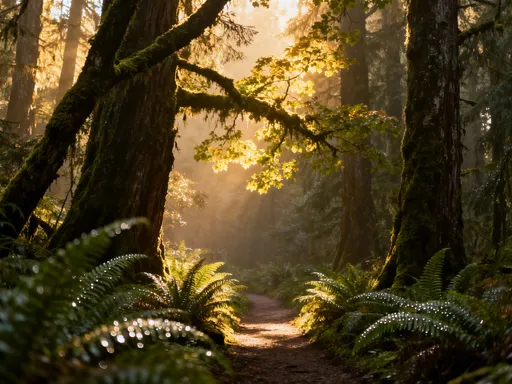
Deep within the southern reaches of Yosemite, where the air cools and the forest thickens, lies Mariposa Grove—a sanctuary of giant sequoias that inspires reverence with every step. Home to over 500 mature sequoias, some exceeding 2,000 years in age, this grove is not just a collection of trees but a living chronicle of endurance. To walk here is to enter a cathedral of nature, where sunlight filters through a canopy hundreds of feet above, and the scent of bark and damp earth lingers in the air. The sheer scale of these trees—some wider than a city bus is long—defies comprehension, grounding visitors in a sense of deep time and quiet majesty.
The Grizzly Giant, estimated to be around 1,800 years old, stands as one of the grove’s most iconic residents. Its massive, furrowed trunk rises in spiraling grandeur, bearing the scars of centuries of fire and weather. Nearby, the Fallen Monarch—a once-standing giant now reclining across the forest floor—offers a tangible connection to the cycle of life and decay. Its hollowed base, large enough to walk through, speaks to the resilience of these trees even in death. The California Tunnel Tree, carved in the 1890s to allow wagons to pass through, remains a point of fascination, though modern conservation ethics now emphasize protection over spectacle.
Accessibility has improved with the completion of a new transportation and trail system. Visitors park at the Mariposa Grove Welcome Plaza and take a free shuttle to the grove’s lower entrance, minimizing vehicle impact. From there, a network of boardwalks and graded paths allows exploration for a range of abilities. The two-mile round-trip hike to the Grizzly Giant is moderately paced and richly rewarding, while a longer loop of about four miles connects more of the grove’s highlights. Rangers often lead guided walks, sharing insights into sequoia biology, fire ecology, and the history of preservation efforts in the park.
Conservation is central to the grove’s story. Once threatened by logging and unregulated tourism, Mariposa Grove has been the focus of extensive restoration. Roads have been removed, hydrology restored, and foot traffic carefully managed to protect shallow roots. Visitors are encouraged to stay on designated paths, avoid climbing on trees, and refrain from carving or marking the bark. These practices ensure that future generations may also stand in awe beneath these ancient giants. In their presence, time slows, and perspective shifts—reminding us that some things endure far beyond the span of a single human life.
Tuolumne Meadows: The High Country’s Quiet Majesty
As the road climbs eastward from Yosemite Valley, the landscape transforms. The dense pine forests give way to open skies, granite domes, and sweeping meadows carpeted in wildflowers during summer. Tuolumne Meadows, one of the largest subalpine meadows in the Sierra Nevada, lies at the heart of this high country, a place of airy expanses and crystalline rivers. At nearly 8,600 feet, the air is thinner, the sun stronger, and the silence more profound. This is a landscape for those seeking space—both physical and mental—away from the bustle of the valley below.
The meadow stretches for miles along the Tuolumne River, which meanders in slow, silver ribbons over polished stone. Cottonwood and willow line its banks, while clusters of lodgepole pine dot the edges. Towering peaks—Lyell, McClure, and Unicorn—frame the horizon, their snow-dusted summits visible even in midsummer. The John Muir Trail, one of America’s most revered long-distance paths, passes directly through the meadow, linking Yosemite to the rest of the Sierra backcountry. For day hikers, trails lead to serene destinations like Cathedral Lakes, where alpine waters reflect surrounding cliffs in mirror-like clarity.
Visitors to Tuolumne Meadows should prepare for high-altitude conditions. Temperatures can swing dramatically, with warm days giving way to near-freezing nights. Sun protection is essential, as UV exposure increases at elevation. Weather changes quickly—afternoon thunderstorms are common in summer, so checking forecasts and carrying rain gear is wise. Services are limited; the Tuolumne Meadows Store offers basic supplies, snacks, and maps, but there are no gas stations or medical facilities nearby. Cell service is spotty, reinforcing the sense of remoteness.
Despite its grandeur, Tuolumne Meadows remains less crowded than Yosemite Valley, attracting a different kind of traveler—those drawn to solitude, backpacking, and extended immersion. The Pacific Crest Trail also crosses through here, adding to the steady flow of thru-hikers in season. Camping is available at the Tuolumne Meadows Campground, reservations for which are highly competitive. For those without a site, day visits offer a taste of the high country’s serenity. Whether sitting by the river, photographing wildflowers, or simply breathing the crisp air, time spent here feels restorative. It is a place where the mind unwinds, and the spirit reconnects with the quiet pulse of the natural world.
Glacier Point: A View That Redefines Perspective
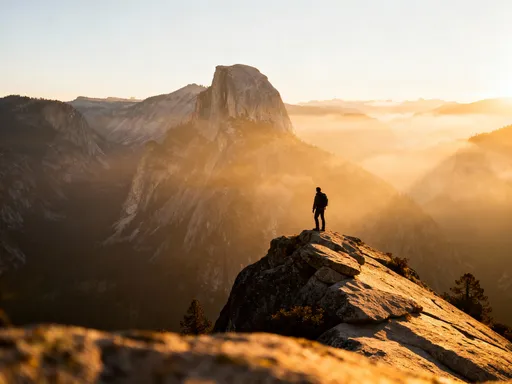
Perched on the southern rim of Yosemite Valley at 7,214 feet, Glacier Point delivers one of the most breathtaking vistas in the entire national park system. From this vantage, the entire valley unfolds below—Half Dome rises to the northeast, Yosemite Falls traces a silver line down the cliffs, and the High Sierra stretches into the distance like a rumpled blanket of granite and pine. On clear days, the view extends over 100 miles, encompassing peaks that few ever set foot on. To stand here at sunrise or sunset is to witness a transformation of light and shadow that feels almost sacred—a moment when the world holds its breath.
Access to Glacier Point can be made by car via Glacier Point Road, which branches off from Highway 120 near Badger Pass. The drive is scenic but narrow and winding, requiring caution, especially for larger vehicles. The road is typically open from late spring through fall, closing in winter due to heavy snowfall. For those seeking a more active approach, the Four Mile Trail ascends 3,200 feet from the valley floor to Glacier Point—a challenging but rewarding hike that takes most hikers between four and six hours. In winter, the point is accessible via cross-country skiing or snowshoeing along the same route, offering a completely different, snow-muted experience.
The viewpoint itself is spacious, with multiple overlooks and interpretive signs that explain the geology and history of what you’re seeing. Rangers often host programs during peak season, helping visitors understand the forces that shaped this landscape—glacial erosion, tectonic uplift, and centuries of weathering. The view of Half Dome from here is particularly striking, revealing its full profile and the sheer drop of its eastern face. On calm evenings, the fading light turns the granite warm gold, then deep rose, before the stars emerge in startling clarity.
With great views come great responsibility. Glacier Point draws large crowds, especially at sunrise and sunset. Visitors are urged to arrive early, stay behind railings, and avoid risky behavior near cliff edges. Drones are prohibited within park boundaries, preserving the natural soundscape. Litter and off-trail walking damage fragile alpine vegetation, so all trash must be packed out. By practicing respectful visitation, travelers help ensure that this iconic viewpoint remains safe and unspoiled. For many, Glacier Point is the emotional climax of a Yosemite trip—a place where the vastness of nature becomes personal, and the soul finds a moment of quiet awe.
Hetch Hetchy: The Hidden Gem Few Know
Tucked away in the park’s remote northwest corner, Hetch Hetchy Reservoir offers a different kind of Yosemite experience—one marked by stillness, reflection, and subtle beauty. Unlike the dramatic cliffs of the main valley, Hetch Hetchy is a quieter landscape, where water meets stone in a broad, U-shaped canyon. The reservoir, created by the O'Shaughnessy Dam, serves as a critical water source for San Francisco, a fact that adds historical and environmental complexity to its serene surface. To some, the dam represents human intervention in wilderness; to others, it’s a testament to ingenuity and necessity. Either way, the area invites contemplation.
The drive to Hetch Hetchy is longer and less traveled, winding through oak-studded foothills before climbing into pine forest. The final stretch, along a narrow road, feels increasingly secluded. Upon arrival, visitors are greeted by a wide, open vista: the reservoir stretches nearly two miles, flanked by sheer cliffs that echo the grandeur of Yosemite Valley but with far fewer people. The water, deep and clear, reflects the sky and surrounding rock with a stillness rarely found elsewhere in the park. Trails begin at the O'Shaughnessy Dam, leading eastward along the reservoir’s edge.
The most popular hike is the 5.5-mile round-trip to Wapama Falls, a powerful cascade that thunders down the canyon wall in spring and early summer. When water flow is high, mist fills the air, and rainbows dance in the sunlight. Tueeulala Falls, nearby, drops in a graceful, wide sheet. These falls are best seen between May and July; by late summer, they may reduce to a trickle. The trail is mostly flat but can be rocky in places, and visitors should be cautious when crossing wet surfaces near the falls. Restrooms and picnic areas are available near the dam, but there are no food services or lodging nearby.
Hetch Hetchy’s story is layered. In the early 20th century, a fierce debate erupted over whether to dam the valley for water supply. Conservationist John Muir fought passionately against it, calling the proposed reservoir a desecration. Despite his efforts, the dam was completed in 1923. Today, the area stands as a reminder that nature and human needs often intersect in complex ways. For visitors, it offers solitude, scenic beauty, and a chance to reflect on stewardship. It is not the Yosemite of postcards—but for those willing to venture off the beaten path, it may be the most memorable part of their journey.
Maximizing Your Immersive Experience: Strategies for Deeper Connection
Yosemite can be experienced in many ways: as a checklist of landmarks, a backdrop for photographs, or a fleeting roadside stop. But to truly connect with this place—to feel its pulse and carry its memory long after departure—requires intention. The most transformative visits are those that slow down, look closely, and engage the senses fully. By adopting a few mindful strategies, travelers can move beyond surface-level tourism and cultivate a deeper, more personal relationship with the park.
Staying multiple days is one of the most effective ways to deepen your experience. A single day in Yosemite Valley may allow you to see the highlights, but it rarely allows for stillness. Returning at dawn, when the valley is bathed in soft light and wrapped in mist, reveals a completely different world. The same trail walked twice—once in the busy afternoon, once in the quiet morning—can feel like two separate places. Lodging options range from the historic Ahwahnee Hotel to campgrounds and wilderness cabins, each offering its own way to extend your stay.
Practicing mindful observation enhances presence. Instead of rushing from viewpoint to viewpoint, choose one spot and stay for 20 minutes. Listen to the wind in the pines, watch the play of light on granite, notice the small details—a wildflower pushing through rock, a bird circling overhead. Put the phone away. While photos preserve memories, they can also distance us from the moment. Being fully present—feeling the sun, hearing the water, breathing the air—creates a different kind of keepsake.
Engaging with park rangers and educational programs adds depth. Free guided walks, evening talks at campgrounds, and junior ranger activities for children offer insights into geology, wildlife, and conservation. These programs transform scenery into story, helping visitors understand not just what they’re seeing, but why it matters. Learning about fire’s role in sequoia reproduction or the migration patterns of mule deer fosters a richer appreciation of the ecosystem.
Finally, embracing Leave No Trace principles ensures that Yosemite remains pristine for others. Pack out all trash, stay on designated trails, respect wildlife by keeping distance, and avoid loud noises that disrupt the natural soundscape. These actions are not just rules—they are expressions of care. Yosemite is not just a destination. It is a living landscape, a sanctuary of wild beauty, and a mirror reflecting our own place within the natural world. To visit with awareness, humility, and gratitude is to leave not just with photographs, but with a renewed sense of wonder.