Taste the Rhythm of Seychelles — How Slowing Down in Victoria Led to the Meal of a Lifetime
You know that feeling when you finally slow down and let a place speak to you? In Victoria, Seychelles, I stopped chasing sights and started savoring moments—especially at the table. This isn’t just about food; it’s about how eating like a local opens doors to culture, connection, and unexpected joy. Let me take you through the flavors, faces, and quiet magic of a city that taught me what real travel tastes like.
Arrival in Victoria: First Impressions That Defy Expectations
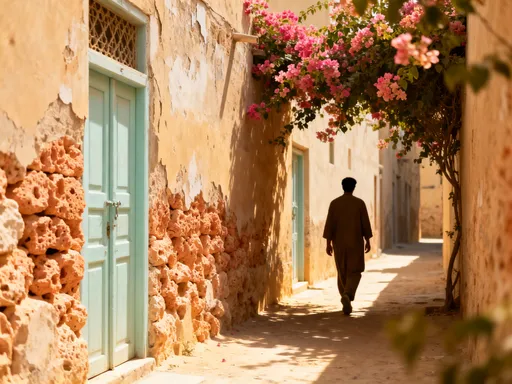
Victoria, the capital of Seychelles, greets visitors not with grand monuments or towering skylines, but with color, rhythm, and an unassuming charm that unfolds slowly. Spread across just over 30 square kilometers, it is one of the smallest national capitals in the world—yet its cultural footprint is immense. As the heart of Creole life on Mahé, the largest island in the archipelago, Victoria pulses with a blend of colonial history and island vitality. The first thing that strikes you is the palette: pastel-painted wooden homes with corrugated tin roofs, their shutters painted in bright blues, yellows, and greens. Streets are narrow, winding, and often quiet, lined with frangipani trees and the occasional roaming rooster.
But it is the sensory details that truly anchor the experience. The air carries a layered scent—ripe mangoes ripening in the sun, woodsmoke from backyard kitchens, and the sharp, earthy aroma of freshly ground nutmeg. From open doorways, French-Creole conversations spill into the street, a melodic mix of lilting vowels and rhythmic phrasing that sounds like music even if you don’t understand every word. The market square, marked by a replica of a British clock modeled after Big Ben but painted in cheerful blue and white, becomes a natural starting point. Yet the real story doesn’t unfold in guidebooks or on postcards. It reveals itself when you stop rushing.
Travelers often arrive in Victoria expecting a bustling urban center, only to find a relaxed pace that defies conventional expectations. There are no traffic lights, few high-rises, and a noticeable absence of hurried footsteps. This is not a city built for speed. Instead, it invites you to match its tempo—slow, deliberate, and observant. And it was this shift in rhythm that changed everything for me. By choosing to linger, to sit on a bench near the market and simply watch, I began to notice the subtle patterns of daily life: the fisherman unloading his morning catch, the schoolchildren in crisp uniforms walking home, the elderly woman selling boiled peanuts from a wicker basket.
That first afternoon, I learned that presence matters more than itinerary. When you stop trying to see everything, you start seeing what truly matters. The decision to slow down wasn’t planned—it was intuitive. But it opened a door. Because in Victoria, as in much of Seychelles, the deepest experiences aren’t found in ticking off attractions. They emerge in shared glances, in offered cups of tea, in the unexpected invitation to join someone at their table. And that table, I would soon discover, was where the soul of the island truly resided.
The Heartbeat of Local Life: Exploring Sir Selwyn Selwyn-Clarke Market
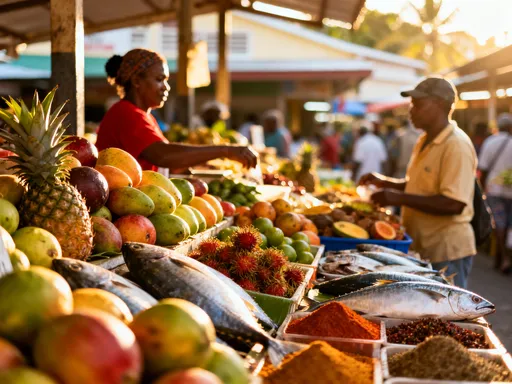
If Victoria has a beating heart, it is the Sir Selwyn Selwyn-Clarke Market—a vibrant, open-air hub where the island’s agricultural bounty and culinary traditions converge. Named after a former governor known for his public health reforms, the market is not a tourist spectacle but a working space where locals come to buy, sell, and connect. Arriving early in the morning, just after sunrise, is essential. By 7:30 a.m., the stalls are fully stocked, the air is cool, and the energy is palpable. This is when the fish is freshest, the fruits most fragrant, and the vendors most willing to chat.
The market is organized in sections: produce on one side, fish and meat in the center, spices and crafts toward the back. Walking through the covered aisles, you’re immediately struck by the colors—pyramids of pink-fleshed grapefruit, mounds of golden papayas, and clusters of breadfruit the size of basketballs. Bananas hang in long bunches, their skins still dusted with morning dew. Vendors sit behind wooden counters, many wearing wide-brimmed hats to shield themselves from the rising sun. Some greet you with a nod; others call out with a cheerful “Bonjour!” or “Salam!” reflecting the island’s multicultural makeup.
One of the most striking features is the seafood section. Here, fish are laid out on ice with names that read like poetry: red snapper, jobfish, wahoo, and parrotfish. Octopus, still coiled from the sea, rests beside baskets of squid. A fishmonger demonstrates how to clean a dorado in seconds, her hands moving with practiced ease. Nearby, smoked fish—often tuna or shark—are hung in rows, their surfaces darkened from wood-fired curing. These are staples in Creole kitchens, adding depth to stews and sauces.
But the market is more than a place to shop—it’s a gateway to relationship. I learned this when I stopped at a spice stall run by a woman named Marie, who recognized my curiosity. “You want real flavor?” she asked, handing me a small bag of freshly ground cinnamon. “Then you must cook with what grows here.” We talked for nearly twenty minutes—about her garden on the hillside, her mother’s recipes, and the importance of using local chilies instead of imported ones. Before I left, she slipped me a sprig of kari leaves, the Seychellois version of curry leaves, and said, “Come back tomorrow. I’ll show you how to use them.”
That simple exchange became a turning point. The next day, I returned—not just to buy, but to listen. And as I did, other vendors began to share. A man selling coconuts cracked one open for me, showing how to drink the water and scrape the flesh. A farmer offered me a slice of soursop, its creamy texture bursting with citrus and strawberry notes. These weren’t transactions; they were gestures of welcome. And they led to something even more profound: an invitation to join a family for lunch.
It turns out that the market isn’t just where food is sold—it’s where trust is built. By showing up consistently, by asking questions with genuine interest, by accepting a cup of tea or a sample of fried plantain, I was no longer just a visitor. I was becoming part of the rhythm. And that rhythm, I realized, moves to the beat of shared meals.
Creole Cuisine Uncovered: What Makes Seychellois Food Unique
Seychellois Creole cuisine is not a single tradition, but a living mosaic shaped by centuries of migration, trade, and island adaptation. At its core, it is a fusion of African, French, Indian, and Chinese culinary influences, refined over generations into something distinctly its own. Unlike the heavily spiced curries of the Indian subcontinent or the rich sauces of metropolitan France, Creole food is balanced—bold but not overwhelming, aromatic but never masked. It relies on fresh ingredients, slow cooking, and a deep respect for the sea and soil.
The foundation of most dishes is coconut milk, extracted from grated flesh and simmered to create a creamy base for stews and curries. This is often combined with onions, garlic, ginger, and chili—ingredients that form the “base” of nearly every savory dish. Lime juice adds brightness, cutting through the richness, while fresh herbs like coriander and kari leaves infuse depth. Octopus, fish, chicken, and goat are common proteins, each prepared in ways that highlight texture and flavor. Breadfruit, taro, and cassava serve as hearty staples, replacing potatoes or rice in many meals.
One of the most iconic dishes is ladob, a slow-cooked preparation that can be savory or sweet. Ladob fish, for example, involves marinating fish in lime and spices, then wrapping it in banana leaves and simmering it in coconut milk until tender. The banana leaf imparts a subtle earthiness, while the slow cooking allows the flavors to meld completely. On the sweeter side, ladob banan features ripe plantains cooked in coconut milk with cinnamon and vanilla—a dessert often served during family gatherings.
Another staple is rougaille, a tomato-based sauce flavored with onion, garlic, and chili, sometimes enriched with smoked fish or sausage. It’s typically served over rice or alongside grilled fish. Chatini lizav, a tangy cabbage salad made with vinegar, chili, and fresh herbs, provides a crisp contrast to richer dishes. And for special occasions, bouyon—a hearty soup filled with meat, vegetables, and dumplings—brings families together around the table.
What makes this cuisine truly unique is not just the ingredients, but the philosophy behind it. Meals are rarely rushed. Cooking is often a communal activity, with multiple generations involved in preparation. The kitchen is a place of storytelling, where recipes are passed down orally and adjusted based on what’s available. There’s a deep connection between food and identity—each dish carries the memory of an ancestor, a journey, or a celebration.
Moreover, sustainability is built into the tradition. Nothing is wasted. Fish bones become stock. Overripe fruit is turned into jam or dessert. Leftovers are repurposed into new meals. This respect for resources reflects the island’s isolation and self-reliance. And it teaches a valuable lesson for travelers: that the most meaningful meals are not the most elaborate, but the ones made with care, connection, and intention.
From Market to Table: A Day Cooking with a Local Family
The invitation came unexpectedly. After several mornings at the market, I had become a familiar face. One day, Marie introduced me to her cousin, Elise, who ran a small guesthouse on the outskirts of town. “You like our food?” Elise asked. “Then come cook with us.” The next morning, I arrived at her home, a modest house with a red-tiled roof and a garden bursting with chilies, herbs, and banana trees. Her family—two daughters, a nephew, and her mother—greeted me warmly, already moving through the kitchen in a well-practiced dance.
We began with the market haul: fresh red snapper, green bananas, coconuts, and a bundle of kari leaves. The first task was extracting coconut milk. Elise showed me how to grate the flesh using a hand-cranked mill, then squeeze the pulp through a cloth to release the thick, white liquid. “This is real cream,” she said with pride. “No cans, no preservatives.” As the milk was set aside, we turned to the fish. Cleaning and scaling it was messy work, but the family laughed easily, teaching me how to remove the gills and rinse the cavity with lime juice to eliminate any odor.
The real magic began when we started preparing ladob fish. The snapper was scored, rubbed with salt, chili, and garlic, then wrapped tightly in banana leaves. “This keeps the flavor inside,” Elise explained. “And the leaf adds its own taste—like nature’s foil.” The parcels were placed in a large pot with coconut milk and simmered slowly over a wood-fired stove. While it cooked, we made chatini lizav, shredding cabbage by hand and mixing it with chopped onion, scotch bonnet pepper, vinegar, and fresh coriander. The result was sharp, spicy, and refreshing—a perfect counterpoint to the rich stew.
But more than the food, it was the conversation that stayed with me. As we peeled garlic and ground spices in a mortar, Elise’s mother shared stories of growing up on a coconut plantation, of walking miles to school, of learning to cook from her grandmother. Her daughters chimed in with modern twists—how they now use social media to share recipes, but still follow the old ways. We talked about family, faith, and the changes they’ve seen in Victoria over the decades. I wasn’t just learning to cook—I was being welcomed into a lineage.
When the meal was finally served, we ate together at a long wooden table under a shaded veranda. The ladob fish was tender, infused with coconut and spice, the banana leaf lending a smoky depth. The chatini added a bright kick. We drank coconut water straight from the shell and finished with slices of mango so sweet they needed no sugar. No one rushed. No one checked their phone. We simply ate, talked, and enjoyed the moment.
That evening, as I walked back to my guesthouse, I realized something profound: I hadn’t just had a meal. I had been adopted, however briefly, into a family. And that feeling—that sense of belonging—was more nourishing than any dish. It reminded me that food is not just fuel. It is a language. And in Victoria, it speaks directly to the heart.
Hidden Eateries Only Locals Know: Beyond Tourist Menus
While the market and home kitchens offer deep cultural immersion, another layer of Victoria’s culinary soul can be found in its hidden eateries—unmarked kiosks, backyard grills, and family-run stalls that don’t appear on maps or review sites. These spots, often known only to residents, serve some of the most authentic Creole food on the island. They operate on trust, tradition, and word of mouth, opening for a few hours at lunchtime or on weekends when a grandmother decides to cook for the neighborhood.
One such place is a small wooden counter tucked behind a residential compound near the harbor. Run by an elderly couple, it opens only on Fridays and Saturdays, serving daube—a slow-braised beef stew simmered with onions, garlic, vinegar, and spices for hours until the meat falls apart. The dish is served with rice and a side of pickled chilies. There’s no sign, no menu, just a chalkboard with the day’s offering. Locals arrive on foot or by scooter, often bringing their own containers to take leftovers home.
Another favorite is a roadside grill where a man named Alain cooks rougaille saucisse over charcoal every weekday. The scent draws you in long before you see the setup: a metal cart with a grill, a pot of simmering tomato sauce, and a stack of fresh baguettes. The sausage—spiced with cloves and chili—is grilled until crisp, then served in a roll with a ladle of rougaille. It’s simple, hearty, and deeply satisfying. Tourists rarely find it, but office workers and delivery drivers line up daily.
Finding these places requires patience and openness. The best strategy is to ask. “Where do you eat lunch?” is a powerful question. So is “What’s good today?” spoken with a smile. Neighbors are often happy to point you toward their favorite spot. Sometimes, the best meals happen by accident—like the time I followed a group of schoolteachers down a side street and ended up at a woman’s home where she was serving bouyon to anyone who knocked.
These informal eateries are more than just places to eat. They are community hubs, where news is shared, jokes are traded, and connections are strengthened. They reflect a way of life that values generosity and simplicity. And they remind us that the best travel experiences often come not from planning, but from surrendering to the rhythm of a place.
Slow Travel as a Mindset: How Food Rewired My Journey
Before Victoria, my travel style was efficient—maximizing sights, optimizing routes, ticking off checklists. I measured success by how much I could see in a day. But in Seychelles, that approach dissolved. Slowing down didn’t just change how I ate; it changed how I moved through the world. I began visiting the same market stall every morning, not just to buy, but to connect. I learned the vendor’s name, her children’s names, her favorite recipe. I noticed the way the light hit the market awnings at 8:15 a.m., or how the breeze shifted after noon.
Eating slowly became a form of meditation. Sitting at a wooden bench with a plate of grilled fish and a glass of fresh coconut water, I started to observe the details I’d once missed: the way an old man repaired a fishing net with meticulous care, the laughter of children playing in a nearby alley, the rhythm of the tide as it inched up the shore. These moments weren’t on any itinerary, yet they became the most memorable parts of the trip.
Repetition, I learned, deepens understanding. Going back to the same places allowed me to see change—the ripening of fruit, the arrival of a new vendor, the shift in conversation as trust grew. It also allowed relationships to form. I was no longer a face in the crowd. I was the woman who liked extra chili, who always asked about the fish, who returned with a small gift of tea from the mainland.
And through food, I began to understand the island’s values: patience, hospitality, resilience. Meals were not consumed; they were experienced. Time was not wasted; it was invested. The act of sharing a plate became a quiet act of belonging. I realized that flavor is not just a sensation—it is memory in the making. The taste of coconut milk simmered over wood fire, the heat of a fresh chili, the sweetness of a sun-ripened mango—these are not just tastes. They are anchors, pulling me back to a moment, a person, a place.
Bringing It Home: Carrying the Spirit of Seychellois Cuisine Forward
Returning home, I didn’t just bring back souvenirs—I brought back a mindset. I started cooking with more intention, seeking out fresh ingredients, and involving my family in the process. I adapted simple Creole recipes for my kitchen: a coconut milk-based fish stew, a spicy cabbage salad, a banana leaf-wrapped chicken dish. I couldn’t replicate the exact flavors—my tap water isn’t infused with island minerals, my coconuts aren’t picked from a backyard tree—but I captured the spirit.
More importantly, I carried forward the philosophy of slow dining. I began setting the table with care, turning off screens, and making meals a time for conversation. I invited neighbors over, not for elaborate dinners, but for simple, shared plates. And I reminded myself that travel isn’t just about going somewhere—it’s about bringing something back. Not just photos or trinkets, but a way of being.
For future trips, I now seek connection over convenience. I look for markets, not malls. I ask locals where they eat, not where tourists go. I allow myself to linger, to repeat, to return. Because I’ve learned that the deepest experiences aren’t found in speed, but in stillness. They’re in the shared meal, the offered recipe, the unexpected invitation.
Victoria doesn’t shout. It whispers. It doesn’t dazzle with spectacle, but feeds you with quiet generosity. And if you listen—if you slow down, sit at the table, and open your heart—it will feed your soul.